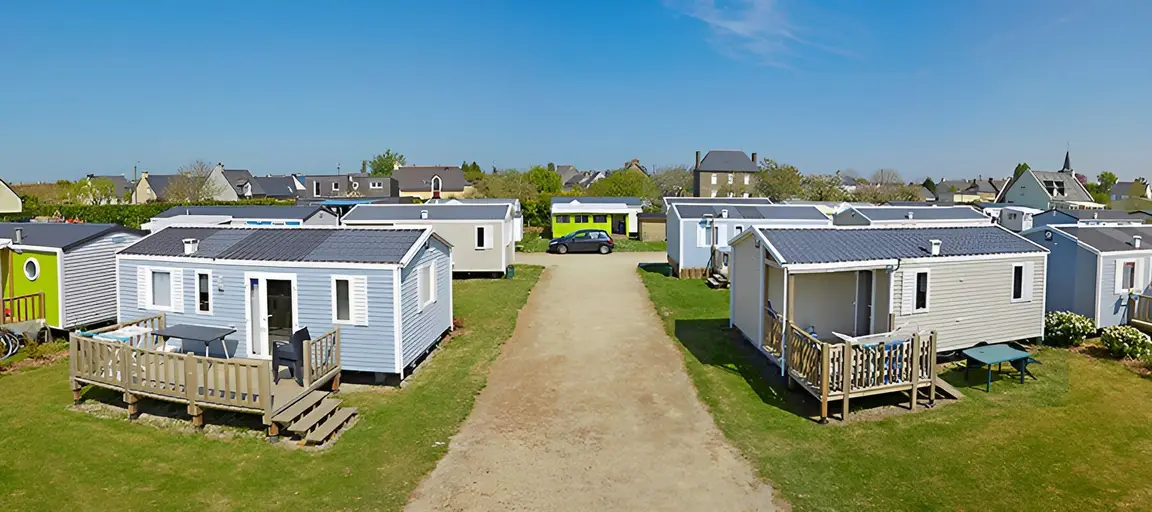

Can I Move or Sell My Mobile Home?
Owning a mobile home gives you flexibility, but if you decide to sell it or move it in the future, it’s important to understand your options. While homeowners generally have the right to sell their home, moving a mobile home or transferring ownership within a land-lease community often involves additional steps. Understanding the process ahead of time can help make everything go much more smoothly.
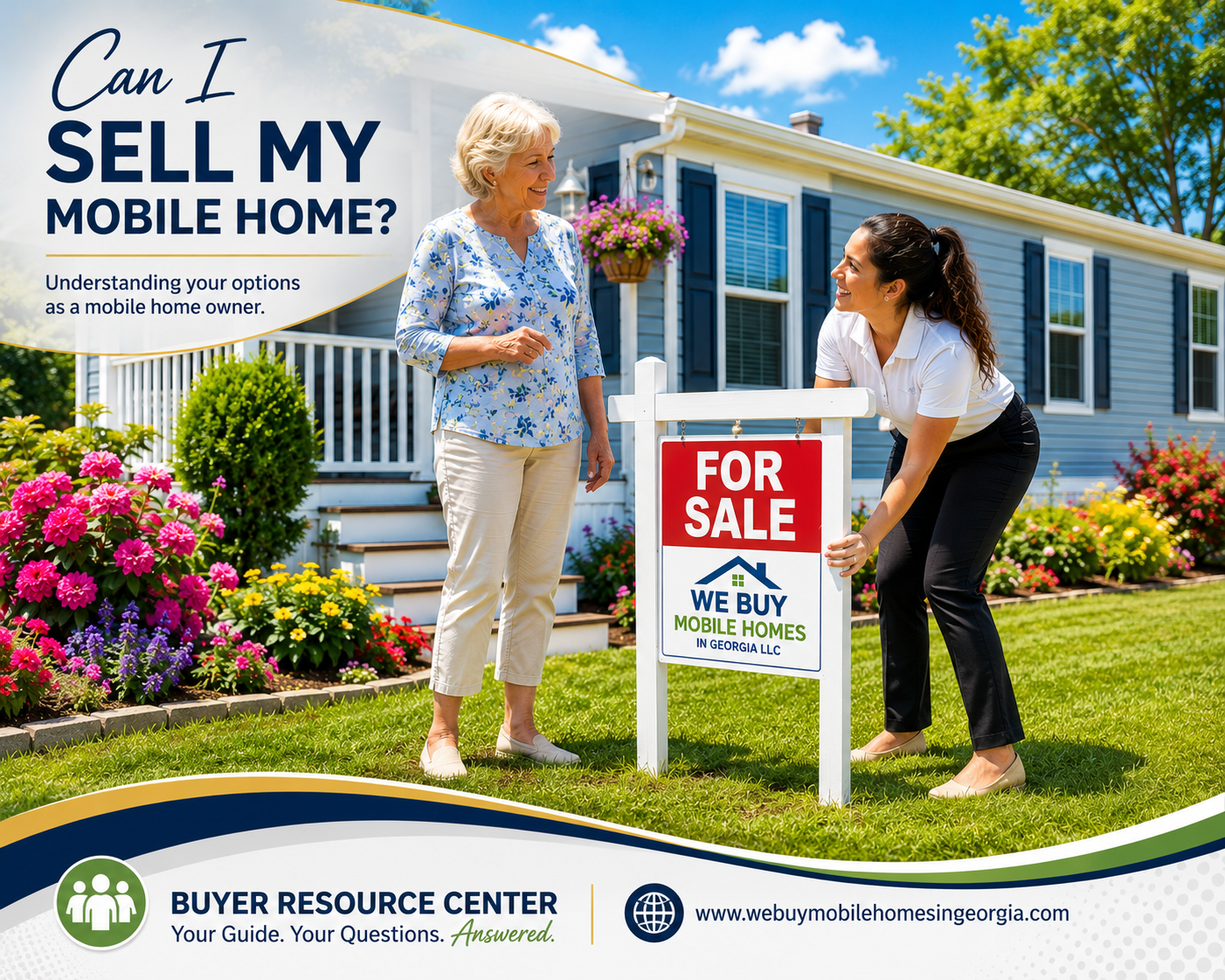
Can I Sell My Mobile Home?
Yes. In most cases, you can sell your mobile home just like any other homeowner. Whether you’re ready to move closer to family, relocate for work, or simply want a different home, selling your mobile home is generally your decision as the owner.
If your home is located in a land-lease community, it’s important to understand that selling the home and occupying the homesite are two separate processes. While ownership of the home can be transferred to a new buyer, the community may have its own procedures that must be followed before the new owner can assume the homesite lease.
Some communities may also have provisions such as a first right of refusal or other requirements outlined in the lease agreement. Our Community Living guide explains how land-lease communities work and what homeowners should expect. Because every community operates differently, it’s also important to review your lease and speak with community management before listing your home for sale.
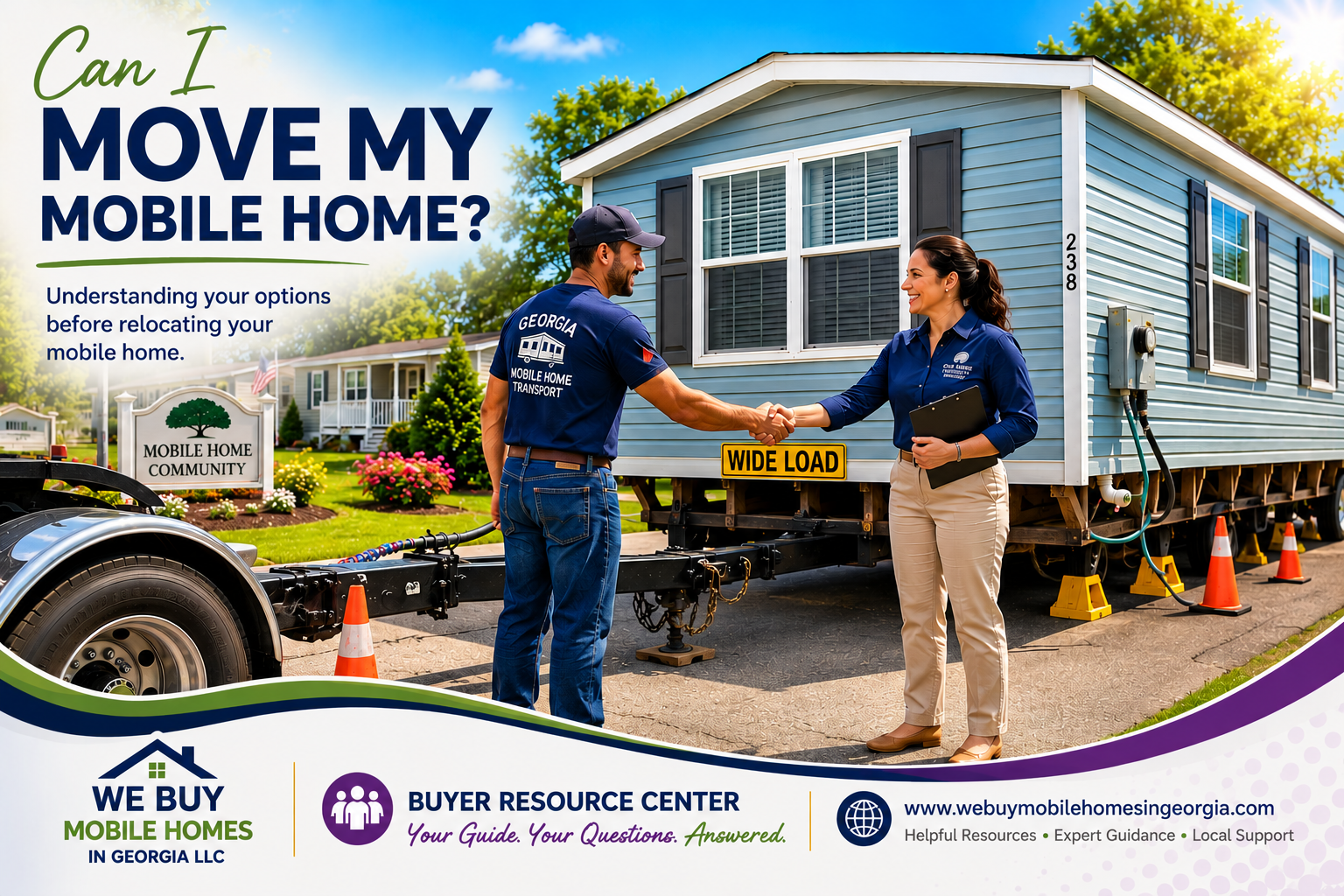
Can I Move My Mobile Home?
The answer depends on your community’s policies and the terms of your lease agreement. Although manufactured homes are designed to be moved, relocating a home from a land-lease community is often more involved than many buyers expect.
Some communities allow homeowners to move their home after a certain period of ownership, while others may have additional requirements that must be satisfied before a home can be removed. Certain communities may also have a first right of refusal or other provisions outlined in the lease agreement.
Moving a mobile home also requires careful planning. Utilities must be disconnected, permits may be required, the home must be prepared for transport, and a qualified mobile home mover should handle the relocation. Taking the time to understand these requirements before making plans can help avoid unnecessary delays and unexpected expenses.
Before scheduling a move, we recommend reviewing our Community Living guide to better understand how land-lease communities operate, then contacting your community management and reviewing your lease agreement so you understand your options, any applicable waiting periods, and the procedures that apply to your specific community.

What Happens If I Sell My Mobile Home?
If your mobile home will remain in the community after it is sold, there are typically a few additional steps that help ensure a smooth transition for everyone involved. While ownership of the home transfers to the new buyer, the homesite lease also needs to be transferred so the new homeowner becomes the registered leaseholder for the homesite.
Before the sale is finalized, buyers should review our What Happens During Community Approval? guide to understand the community’s application process and residency requirements. Once those requirements have been satisfied, the homesite lease can be transferred from the current homeowner to the new homeowner according to the community’s procedures.
The sale itself is completed through the normal transfer of ownership, including a bill of sale and any applicable title paperwork. If the home will remain within the community, our Community Living guide explains how homesite leases work and what homeowners should know before transferring ownership.
Following the community’s established process protects both the buyer and the seller while helping make the transition as smooth and straightforward as possible.
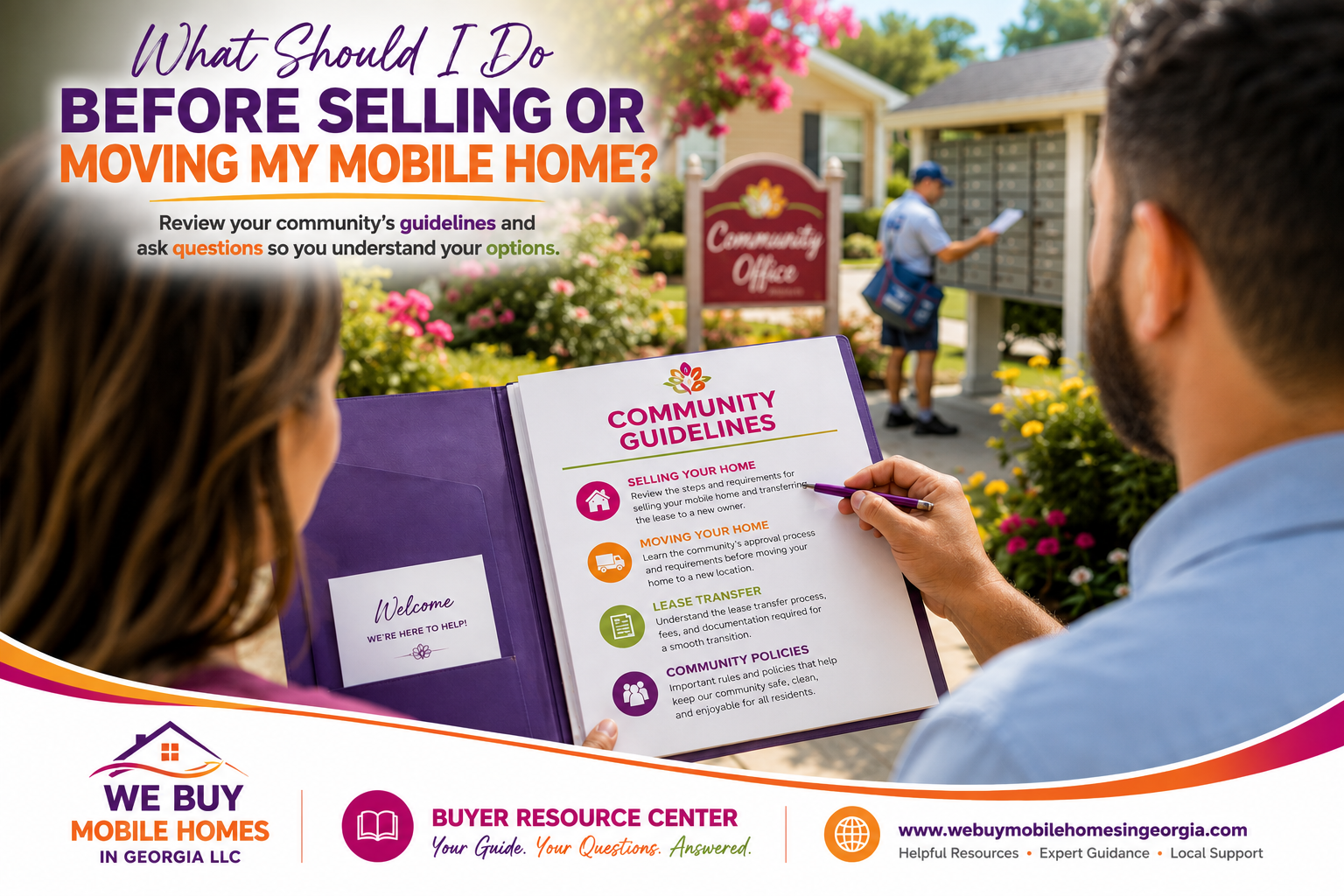
What Should I Do Before Selling or Moving My Mobile Home?
Before making any decisions, take a few minutes to understand your community’s policies and the steps involved in selling or moving your mobile home. Every community operates a little differently, and knowing what to expect can help prevent unnecessary delays and make the entire process much easier.
A good place to start is by reviewing our Community Living guide and speaking with your community management. The guide explains how land-lease communities operate, common community policies, and what homeowners should know before selling or moving a mobile home. You should also review your lease agreement to understand any requirements that apply to your specific community.
If you’re planning to sell your home, encourage prospective buyers to review our What Happens During Community Approval? guide so they understand the community’s application process, residency requirements, and what to expect before purchasing your home. Helping buyers understand the process can make the transition smoother for everyone involved.
Every homeowner’s situation is unique. Whether you’re planning to sell your home, relocate it to another property, or simply exploring your options for the future, gathering the right information before making a decision is the best way to protect your investment and avoid unexpected surprises.
By understanding your community’s guidelines and planning ahead, you’ll be better prepared to make informed decisions and enjoy a smoother selling or moving experience when the time comes.
Ready to Find Your Next Mobile Home?
Whether you’re buying your first mobile home or planning your next move, we’re here to help. Browse our available homes, explore more buyer resources, or contact us if you have questions about buying a mobile home in one of Georgia’s land-lease communities.
Continue Exploring Our Buyer Resources